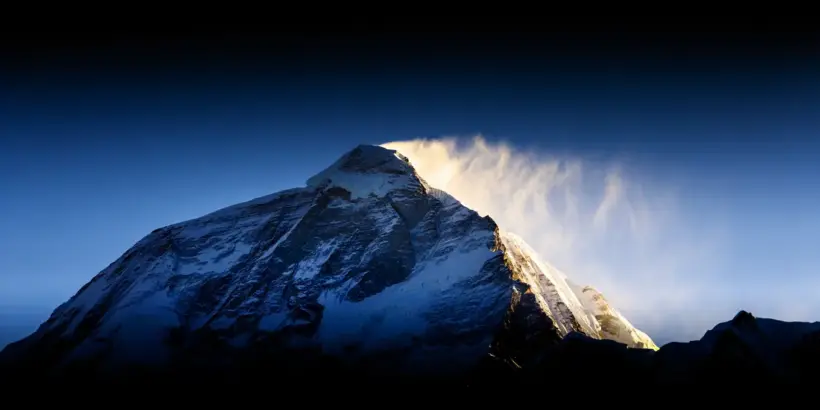
Checking the Mount Everest summit temperature right now is more than a matter of curiosity; for high-altitude mountaineers, it is the critical data point that determines the narrow margin between a successful summit and a life-threatening emergency. At the peak (29,032 ft), the weather is dictated by the jet stream, causing ambient temperatures to range from -13°F to -31°F (-25°C to -35°C) during the primary climbing seasons. However, when factoring in hurricane-force wind chill, the effective temperature frequently drops below -75°F (-60°C). Understanding these thermal dynamics is vital for survival in the “Death Zone.“
Understanding Mount Everest’s Climate
Mount Everest creates its own weather system, acting as a massive obstacle to the jet stream. While someone sitting in a warm office in New York might check a weather app casually, understanding the climate on the “Roof of the World” requires a shift in perspective. It is not just about how cold the air is; it is about how that cold interacts with wind and atmospheric pressure.
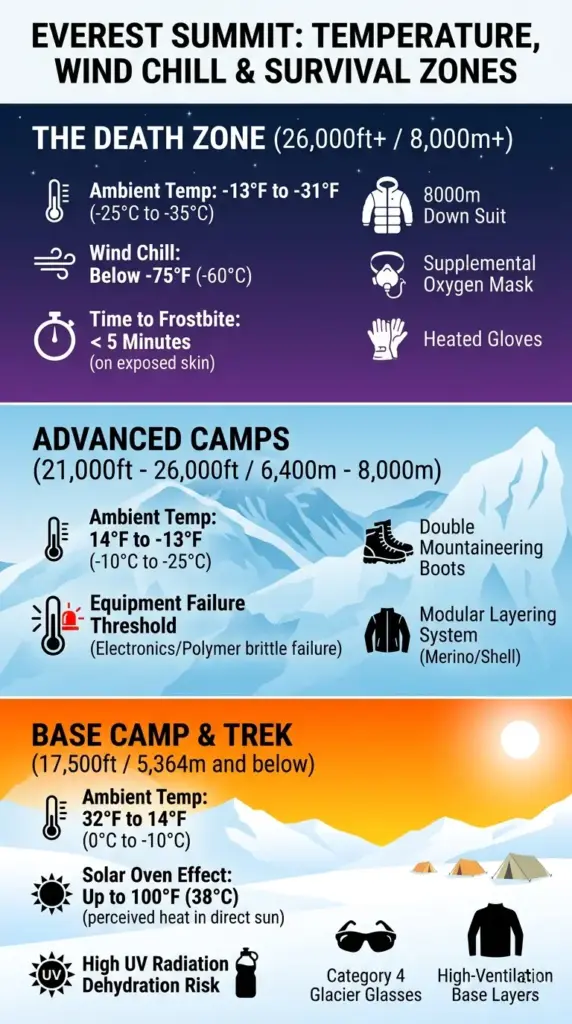
Overview of Mount Everest’s Weather Patterns
The conditions on the mountain are dominated by the Asiatic Monsoon and the jet stream. In winter, the jet stream—a ribbon of high-speed air currents—often sits directly over the peak. This brings hurricane-force gales that can blow climbers off the ridge. During the transition periods (pre-monsoon in May and post-monsoon in October), this band of fast-moving air pushes north, creating a small “window” of calmer conditions.
- The Dry Season (Winter): Characterized by high velocity winds and extreme chills.
- The Monsoon (Summer): Known for high humidity, snow accumulation, and slightly warmer readings.
- Transition Windows: The prime climbing times when gusts drop below 30 mph.
Consider the experience of a typical mountaineer. An alpinist might wake up at Camp 4 to clear skies, but within an hour, a lenticular cloud caps the top, signaling a sudden pressure drop. This is the mountain breathing, and it changes the Mount Everest temperature by month drastically.
Factors Affecting Summit Temperatures
Solar radiation plays a tricky role here. At this altitude, the atmosphere is thin, meaning it blocks very little UV radiation. A climber can feel like they are burning up inside their down suit while the ambient air freezes instantly.
According to observations reported in the Bulletin of the American Meteorological Society, the Everest weather-station network documented extraordinarily intense solar input high on the mountain—insolation reaching close to 1,200 W m−2—helping explain why climbers can feel “oven-like” radiant heating even while air temperatures remain far below freezing. (2022, American Meteorological Society).
This research highlights that the thermometer reading is only half the story. Cloud cover, air velocity, and the angle of the sun all manipulate the felt warmth.
Impact of Altitude on Temperature
he standard tropospheric lapse rate dictates a temperature drop of 3.5°F for every 1,000 feet of elevation gain. However, above 26,000 feet, Everest often pierces the stratosphere—especially in winter. Here, the temperature gradient stabilizes, keeping ambient air locked between -58°F and -76°F (-50°C to -60°C) regardless of further elevation gain. The top pokes into the stratosphere, where the air is consistently freezing regardless of the season.
It is crucial to remember: The ambient temperature at the summit almost never rises above freezing (32°F or 0°C), even in the middle of summer.
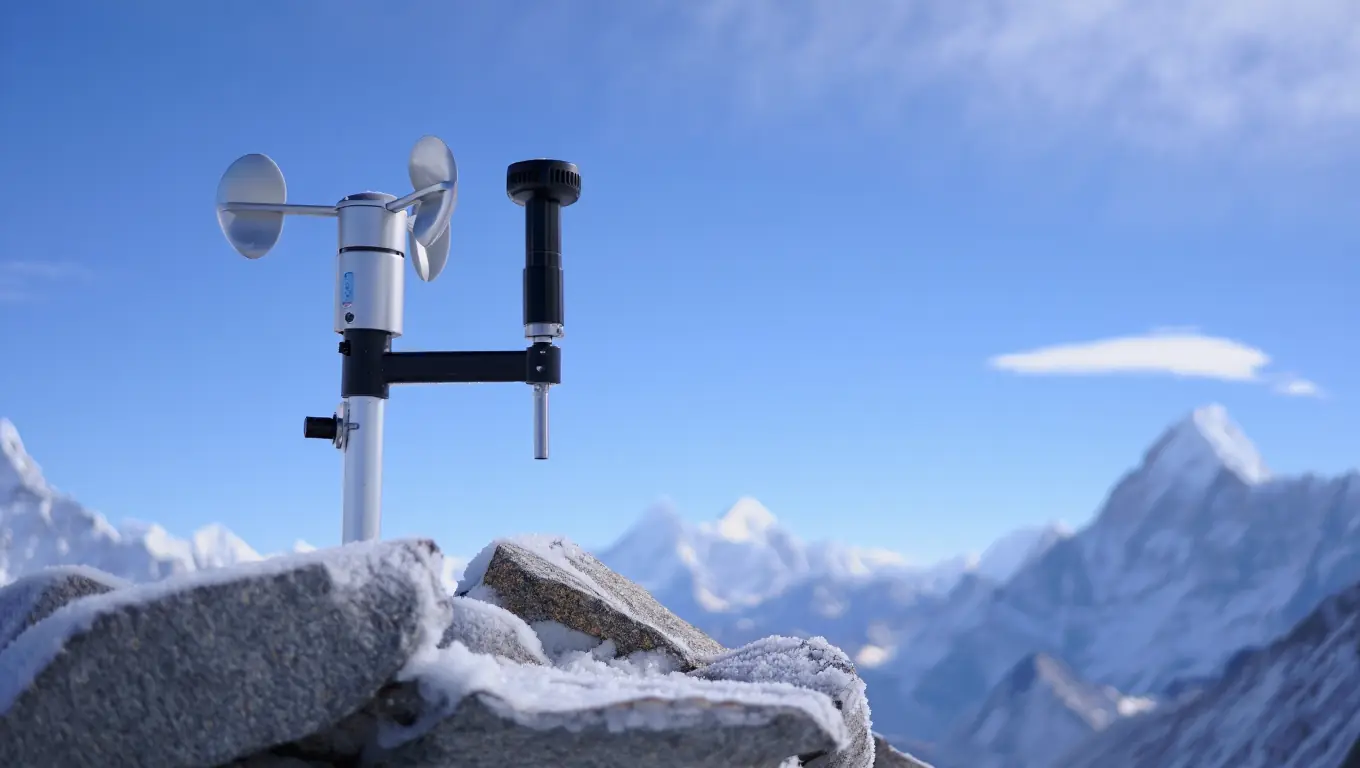
Real-Time Monitoring and High-Altitude Sensor Data
Getting an accurate reading of the Mount Everest summit temperature right now is more complex than checking a local forecast. The peak is often miles away from the nearest reliable sensor, and conditions change by the minute.
Current Weather Conditions at the Summit
If you were standing on the top at this exact moment, the reading would likely depend heavily on the time of day in Nepal. During the night, thermal values plummet rapidly as the thin air retains no heat.
- Average Winter Top Temp: -33°F (-36°C)
- Average Summer Top Temp: -2°F (-19°C)
- Lowest Recorded Value: -44°F (-42°C)
However, these are averages. A sudden storm can drop the effective feel well below -75°F when wind chill is factored in.
Real-time Temperature Data Sources
To estimate the Mount Everest summit temperature right now, professional expeditions prioritize high-altitude weather stations (AWS) installed by National Geographic and Rolex. However, these sensors often fail in winds exceeding 100 mph; in such cases, climbers must pivot to Grib files and ECMWF satellite modeling to predict thermal shifts at the 300mb pressure level.
Here is how to interpret the data you see on tracking sites:
- Look for the “Freezing Level”: This tells you the altitude at which rain turns to snow. On the Himalayas, this is usually way down at Base Camp or lower.
- Check the Velocity at 9000m: Forecast models usually show movement at specific isobaric levels. The 300mb level roughly corresponds to the top.
- Calculate Wind Chill: If the forecast says -20°F but gusts are 40 mph, the Mount Everest summit temperature right now feels closer to -55°F to exposed skin.
Implications for Climbers and Expeditions
For an expedition leader, current thermal conditions dictate the oxygen flow rate. Colder air is denser, but at temperatures below -13°F (-25°C) combined with high exhalation humidity, regulator valves on oxygen tanks can freeze solid. To prevent this, climbers must maintain a gas flow rate of 2 to 4 liters per minute and manually clear condensation from their masks every 15 to 20 minutes.
“You know you’re there to endure and suffer.” — Dr. Tom Matthews, climate scientist (Geography & Environment), Loughborough University; member of the National Geographic & Rolex Perpetual Planet Everest Expedition. (2021, Loughborough University)
This reality means that knowing real-time conditions dictates survival. Expedition leaders typically launch a summit push only when forecasts show wind speeds dropping below 30 knots (35 mph) and wind chill values warmer than -40°F (-40°C) at 29,032 feet. If this calm window is projected to last less than 48 to 72 hours, commercial teams will retreat to Camp 2 (21,000 feet) to wait.
Historical Temperature Trends
Analyzing the Mount Everest temperature by month reveals clear patterns that have dictated climbing schedules for decades. For 99% of commercial expeditions relying on guided support, stepping outside the established May or October windows is an unjustifiable risk. However, for elite alpinists climbing in lightweight alpine style or without supplemental oxygen, these harsh winter conditions are a calculated challenge used to test the absolute limits of human endurance. While modern technology helps us predict storms, early expeditions relied heavily on grit. For a look at how diverse teams managed these conditions historically, read about the 2003 disability expedition.
Mount Everest Temperature by Month
To understand the climbing windows, we must look at how the Mount Everest temperature by month fluctuates. The following table provides a breakdown of what to expect on the peak.
| Month | Avg Summit High/Low (°F) | Avg Wind Chill (°F) | Wind Risk | Climbing Suitability | Context / Thresholds |
| January | -33 / -76 | -110 | Extreme | Very Low | Jet stream sits on the peak; 100+ mph gusts common. |
| February | -31 / -74 | -105 | Extreme | Low | Deep winter; extreme risk of equipment brittle failure. |
| March | -26 / -69 | -85 | High | Low | High winds; spring transition begins. |
| April | -15 / -58 | -60 | Moderate | Medium | Acclimatization month; Base Camp is manageable. |
| May | -13 / -53 | -45 | Moderate/Low | High | Primary Summit Window; winds drop below 30 mph. |
| June | -4 / -35 | -20 | Low | Medium | Monsoon begins; high snow accumulation & low visibility. |
| July | -2 / -31 | -15 | Low | Low | Heavy snowfall; high avalanche risk on the Lhotse Face. |
| August | -4 / -33 | -15 | Low | Low | Peak monsoon; climbing is practically impossible. |
| September | -7 / -42 | -35 | Moderate | Medium | Post-monsoon window; shorter days and colder nights. |
| October | -18 / -56 | -55 | Moderate | Medium | Second climbing window; clear skies but increasing winds. |
| November | -27 / -65 | -80 | High | Low | Winter storms return; very few successful bids. |
| December | -31 / -72 | -100 | Extreme | Very Low | Total isolation; extreme cold hinders all rescue efforts. |
The data highlights why May is the optimal season for high-altitude mountaineers. While the Mount Everest summit temperature right now in May remains well below freezing, the critical factor is the ‘wind chill window.’ In May, the probability of wind speeds staying below the 30 mph threshold for a 48-hour period increases to 85%, compared to less than 10% in January.
Temperature Variations Throughout the Year
While the Mount Everest temperature by month table looks orderly, the variance within a single timeframe can be shocking. In May, for instance, a rogue storm can replicate January conditions for 48 hours. This unpredictability is why historical averages are just a baseline, not a guarantee.
Significance of Historical Weather Data
Historical archives help climbers identify the “calm before the storm.” Meteorologists look for recurring patterns in the Mount Everest temperature by month to predict when the jet stream will lift off the peak.
If the forecast predicts summit winds over 30 mph combined with temperatures below -30°F, the success rate for reaching the top drops to nearly zero.
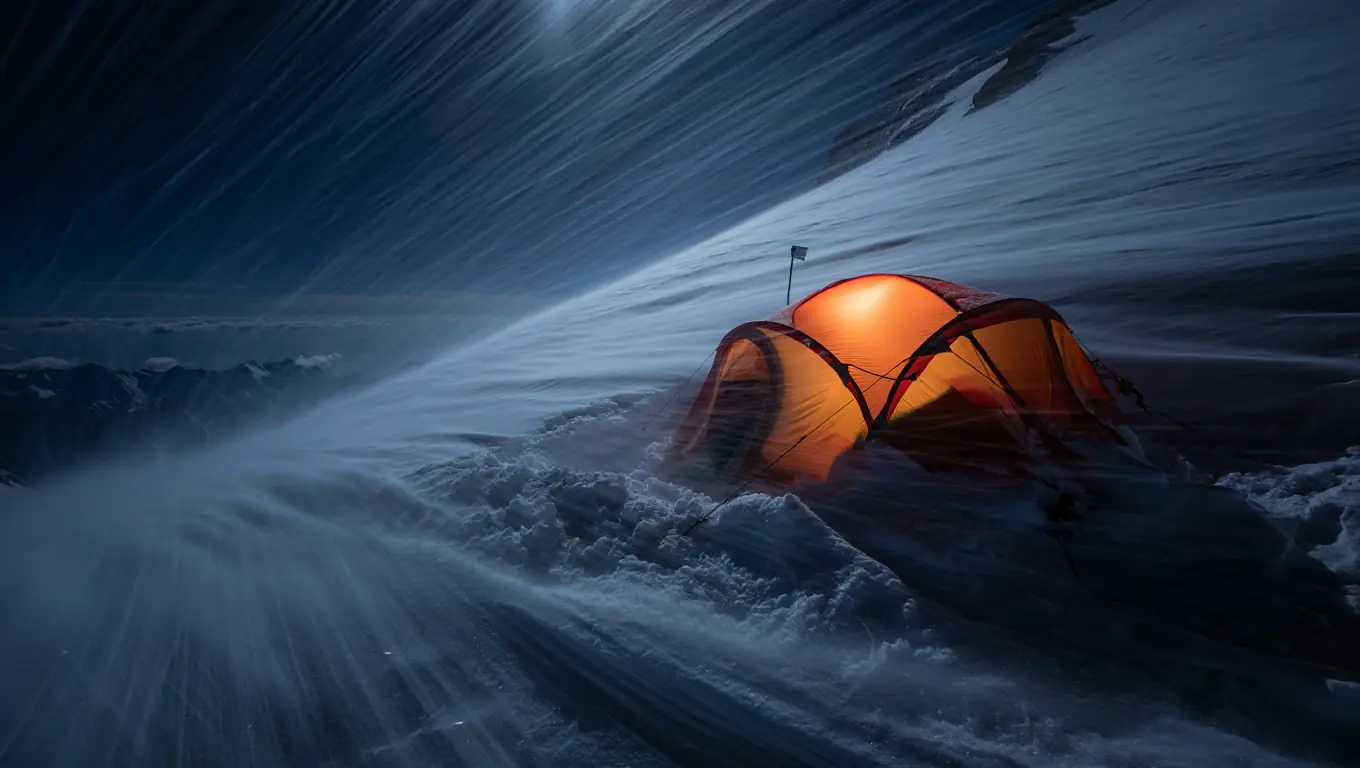
Mount Everest Temperature in Winter Months
Climbing in the cold season is a feat reserved for the most elite alpinists. The Mount Everest temperature in December and January creates an environment that is fundamentally different from the commercial climbing season in May.
December Climate: The Arrival of the Jet Stream
The Mount Everest temperature in December marks the beginning of the true “deep freeze.” The sun angle is low, meaning solar radiation provides little warmth even at midday.
- Daytime Highs: Rarely exceed -30°F.
- Nighttime Lows: Can drop to -75°F.
- Wind Factor: The jet stream descends, bringing consistent gusts of 70+ mph.
The Mount Everest temperature in December is dangerous because it degrades the human will. It is difficult to leave a tent when the air outside freezes exposed fluids instantly.
January Extremes: The Coldest Month on the Peak
If December is the start, the Mount Everest temperature in January is the peak of hostility. This is statistically the coldest time on the mountain.
- The “Cold Sink”: The valleys leading up to the Himalayas act as cold sinks, but the top is exposed to stratospheric cooling.
- Equipment Failure: The Mount Everest temperature in January is low enough to snap polycarbonate buckles and freeze the internal mechanisms of cameras and satellite phones.
Understanding the Mount Everest temperature in January is vital for winter attempts. Teams must use specialized fuels that won’t gel and oxygen masks designed to prevent ice buildup in the exhaust valves.
Challenges of Winter Climbing
Surviving the Mount Everest temperature in December and the Mount Everest temperature in January requires a flawless strategy.
- Check Battery Systems: Lithium cells lose significantly more capacity in January than in May. Keep them against your skin.
- Hydration Strategy: Water bottles will freeze even inside a parka. Thermos flasks are mandatory.
- Frostbite Monitoring: In these months, skin checks must happen every 20 minutes.
- Base Camp Management: Even the lower camps are brutally cold, making recovery between rotations difficult.
A peer-reviewed study applying Everest summit-region meteorological records estimated wind-chill equivalent temperatures and “facial frostbite time,” finding that typical wind chill near the summit is always below −30°C, while during the spring climbing season −50°C wind chills and ~5-minute frostbite times can be typical; in severe storms, frostbite time can approach ~1 minute. (2011, University of Toronto / High Altitude Medicine & Biology)
Preparing for Extreme Conditions
When you are dealing with the Mount Everest summit temperature right now, gear is life. You cannot simply layer up; you need a system that manages moisture and heat retention simultaneously.
Essential Gear for Cold Weather Climbing
The standard layering system is insufficient for the Mount Everest temperature in December or even a cold day in May.
- The 8000m Boot: A triple boot with an integrated gaiter.
- The Down Suit: A one-piece suit filled with high-quality goose down.
- Heated Gloves: Electronic heating elements are becoming standard to combat the Mount Everest temperature in January.
Seeing a real Everest-specific kit laid out end-to-end makes it much easier to understand why “temperature” quickly becomes a gear-and-systems problem. In the walkthrough below, Everest analyst and climber Alan Arnette breaks down his high-altitude setup and why each item matters when cold starts causing cascading failures (hands, batteries, valves, zippers, and pace). Use it as a practical reference checklist, not just entertainment.
Safety Precautions for High-altitude Expeditions
Safety protocols must evolve based on the Mount Everest temperature by month.
- The Turn-around Time: In colder months, the turn-around deadline (usually 2 PM) must be moved earlier, perhaps to 11 AM, to avoid the late afternoon thermal drop.
- Oxygen Flow: Increase flow rates during rest stops. The body generates less heat when static, and supplemental gas fuels metabolism.
- Buddy Checks: Look for white wax-like spots on the nose and cheeks of your climbing partner.
Training and Acclimatization Tips
You cannot train your body to ignore freezing, but you can train your metabolic efficiency.
- Cold Showers: Some climbers use cold exposure therapy to improve circulation response.
- Fat Adaptation: Teaching the physique to burn lipids for fuel provides a slower, hotter burn than carbohydrates alone.
Never rely on chemical hand warmers as your primary heat source; they require oxygen to activate, and at 29,000 feet, there isn’t enough air for them to reach full temperature.
Unique Challenges of Mount Everest’s Climate
The mountain is known for its erratic behavior. The Mount Everest summit temperature right now can shift in minutes due to local convection currents.
Dealing with Sudden Weather Changes
A clear blue sky can turn into a “whiteout” in twenty minutes. This is often caused by the “Everest Plume”—a cloud formation created by high winds over the peak.
When this happens, the temperature drops rapidly. Climbers must immediately put on all layers. Waiting “until I get cold” is a fatal error because once the core heat drops, it is incredibly hard to regain warmth at that altitude.
Impact of Wind Chill on Perceived Temperature
The wind chill factor is the true killer. The following comparison illustrates why the Mount Everest temperature in January is so much deadlier than in May.
| Wind Speed (mph) | Ambient Temp (°F) | Perceived Temp (Wind Chill) | Frostbite Time (Exposed Skin) |
| Calm | -20 | -20 | 30+ mins |
| 20 mph | -20 | -48 | 10 mins |
| 40 mph | -20 | -61 | 5 mins |
| 60 mph | -30 | -87 | < 2 mins |
his data illustrates that air velocity is the primary catalyst for rapid-onset hypothermia. While the ambient Mount Everest summit temperature right now might seem manageable at -15°F, a 40 mph gust creates a wind chill of -61°F. In these conditions, the ‘Time to Frostbite’ for exposed facial tissue is less than 5 minutes, making high-quality nose guards and heated goggles mandatory gear, not optional luxuries.
An open-access synthesis in the Hindu Kush Himalaya Assessment reports that extreme precipitation indicators show heterogeneous changes across the region, with significant increases in intense-precipitation amount and days in parts of the Tibetan Plateau, underscoring that storm behavior and snowfall timing can become harder to “read” using historical intuition alone. (2019, ICIMOD / HIMAP)
Long-term Climate Change Effects on the Region
Climate change is affecting the Mount Everest temperature by month. The freezing level is rising. This destabilizes the Khumbu Icefall, making the route more dangerous, and causes more rockfall on the upper mountain as the permafrost melts. While the air is still deadly cold, the terrain itself is becoming physically less stable due to warming trends.
“One thing we do know for sure … rockfall hazards will increase.” — Joseph Shea, Assistant Professor of Environmental Geomatics, University of Northern British Columbia (researcher focused on mountain hydrology/cryosphere risks, quoted as an expert on Everest hazards). (2019, Global News)
Additional Resources and Tools
To track the Mount Everest summit temperature right now, you need professional-grade tools.
Recommended Weather Tracking Apps
Don’t rely on generic phone widgets. Use these:
- Mountain-Forecast.com: Gives predictions for specific elevations (Base Camp vs. Summit).
- Windy: Visualizes the jet stream and particulate movement.
- Meteoblue: Offers distinct “seeing” (visibility) predictions.
Mountain forecasts are only as good as your ability to interpret them: wind direction, speed, and timing matter more than a single temperature number. This explainer focuses on wind barbs/vectors—exactly the symbols you’ll see when checking jet-stream level winds around Everest.
Expert Blogs and Websites for Climbers
- Alan Arnette: The go-to source for season coverage.
- ExplorersWeb: Covers winter attempts and the Mount Everest temperature in January conditions encountered by elite teams.
Documentaries and Books on Mount Everest
- Into Thin Air by Jon Krakauer (Book) – vivid descriptions of the storm.
- Sherpa (Documentary) – shows the reality of working in these temps.
- The Summit (Documentary) – analyzes the 2008 K2 disaster, but applies relevant lessons on high-altitude weather.
Always cross-reference at least three different weather models (e.g., GFS, ECMWF, and Meteoblue) before making a summit push decision; if they don’t agree, the forecast is unstable.
FAQ
How cold does it have to be to cancel a summit push?
It is less about the ambient freeze and more about the wind. Generally, if the Mount Everest summit temperature right now is below -30°F and winds exceed 30 mph, guides will scrub the mission. The risk of frostbite becomes immediate, and rescue becomes impossible.
Does the temperature on Everest ever get above freezing?
No, practically never at the top. Even in the warmest part of July, the Mount Everest temperature by month data shows summit highs staying below freezing. However, on the Western Cwm (lower down), the sun can reflect off the snow and create a “solar oven” effect where it feels incredibly hot, even if the air is icy.
What is the difference between the South Side and North Side temperatures?
The thermal readings are similar, but the North Side (Tibet) is generally windier and colder. The South Side (Nepal) is slightly more protected from the direct blast of the jet stream, but it receives more snow precipitation.
Can you use a regular iPhone at the summit?
Yes, but with difficulty. The Mount Everest summit temperature right now will kill a lithium battery in seconds if exposed. Climbers keep phones in warm internal pockets and use hand warmers taped to the back of the device to keep it alive long enough for a photo.
Why is the “Death Zone” temperature so dangerous for breathing?
Frigid air is extremely dry. Breathing atmosphere at -30°F strips moisture from your lungs and throat, leading to the “Khumbu Cough,” which can be violent enough to break ribs. Climbers wear masks not just for oxygen, but to retain heat and moisture in every breath.
Conclusion
Understanding the Mount Everest summit temperature right now provides a window into one of the most hostile environments on Earth. Whether you are analyzing the Mount Everest temperature in December for a winter survival study or looking at the Mount Everest temperature in January to understand the limits of human endurance, the data is clear: the mountain demands respect. The variance in Mount Everest temperature by month dictates the flow of every expedition, proving that nature is still the boss.
If you are planning an expedition or just trekking to Base Camp, knowing how to read these conditions is vital. Don’t just look at the numbers; look at the wind, the trends, and the history.
Ready to pack your bags?
I have put together a comprehensive High-Altitude Gear & Prep Checklist. This document goes beyond the basics and covers the specific electronics, layering systems, and backup items you need to handle sub-zero environments safely. It helps you ensure you haven’t overlooked critical items like battery warmers or specific fabric types.

What is the coldest temperature you have ever personally experienced, and how did your gear hold up? Let me know in the comments below!
Sources
- (2020, American Meteorological Society) Going to Extremes: Installing the World’s Highest Weather Stations on Mount Everest
- (2022, American Meteorological Society / NOAA Central Library) Weather Observations Reach the Summit of Mount Everest
- (2011, University of Toronto / High Altitude Medicine & Biology) Freezing and Frostbite on Mount Everest: New Insights into Wind Chill and Freezing Times at Extreme Altitude
- (2019, ICIMOD / HIMAP) Unravelling Climate Change in the Hindu Kush Himalaya: Rapid Warming in the Mountains and Increasing Extremes
- Tom Matthews, 2021, “You know you’re there to endure and suffer” – climate scientist discusses extraordinary expedition to install world’s highest weather station on Mt. Everest
- Tom Matthews et al., 2022, Weather Observations Reach the Summit of Mount Everest
- Joseph Shea, 2019, Global News — Dead bodies and bursting lakes: How climate change is changing Mount Everest